EdOdyssey Collaboration Toolkit: Designing Purposeful, High-Impact Student Travel Programs
Designing a custom student travel program begins with dreaming and brainstorming to reach an initial vision: a destination, a theme, a set of objectives, and questions you want your students to explore through place-based learning.
EdOdyssey partners with institutions to bring that vision to life. We translate high-level ideas into thoughtfully designed, operationally sound programs that lean into our local relationships, the power of place, and authentic immersion. Along the way, we align academic goals with logistics, risk management, student development outcomes, and institutional priorities without losing the space for reflection, curiosity, and connection that make experiential learning powerful.
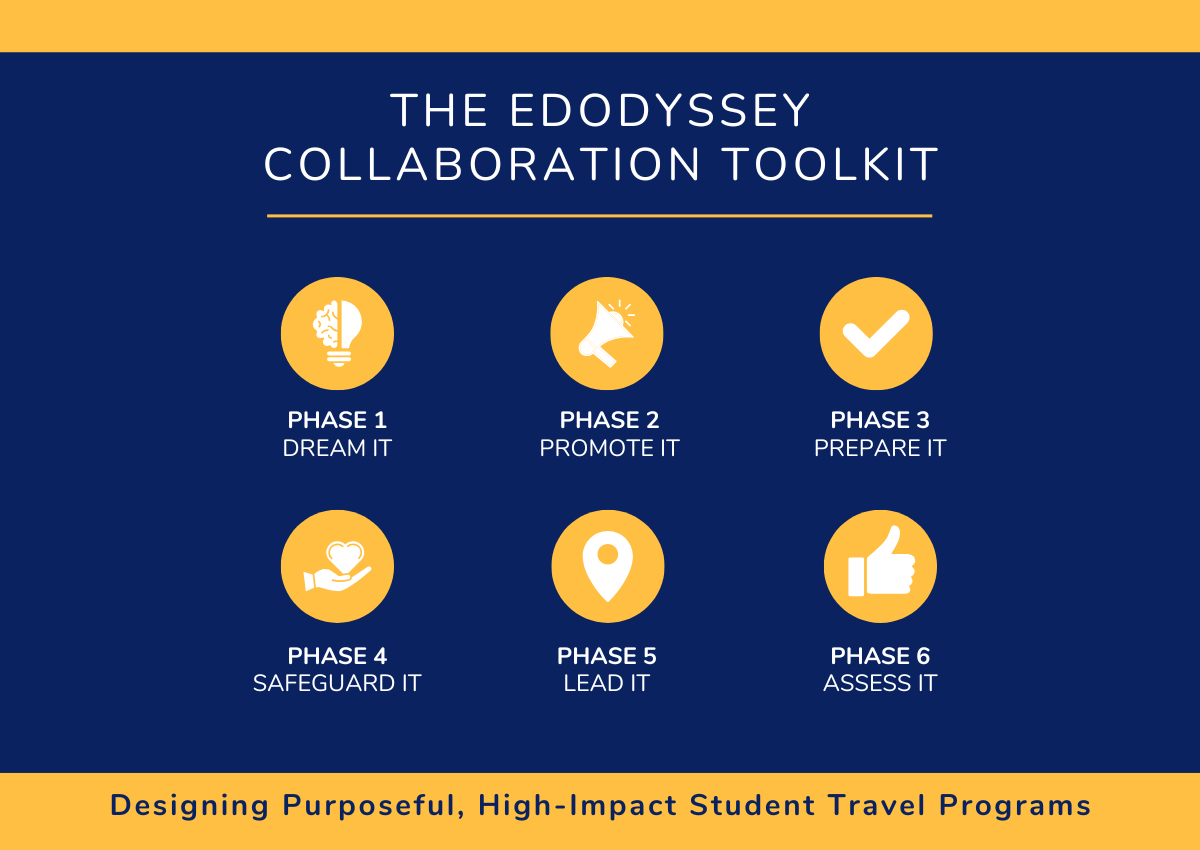
HOW TO USE THIS TOOLKIT
This Collaboration Toolkit is a practical, phase-by-phase resource for our partners who can use it as:
A shared planning framework
A guide for early and ongoing conversations with EdOdyssey
A reference throughout planning, delivery, and post-program review
It outlines how programs move from early conversations through assessment, clarifies shared responsibilities, and makes visible the work EdOdyssey manages behind the scenes. No two programs are identical, but clear roles, timing, and decision points support smoother collaboration and stronger outcomes.

PHASE 1: DREAM IT—CLARIFY VISION AND START PLANNING
Every program begins with a conversation. In this phase, we focus on listening carefully to your ideas, priorities, academic goals, and hopes for the student experience. As a starting point, we introduce relevant EdOdyssey signature programs, which are proven frameworks that reflect best practices and can be refined to align with your institution’s goals, rather than building entirely from scratch.
You do not need to have everything figured out at this point. Whether you’re a seasoned faculty leader or planning your first student travel experience, we guide you through the process and help connect the dots.
During the “Start Planning” meeting, we explore what success looks like for your students and your institution. From that conversation, EdOdyssey develops a free custom proposal. Within two weeks, you receive a draft that outlines program dates, estimated costs, academic focus, learning objectives, activities, inclusions, and key logistical considerations.
Partner Input and decisions
Intended student audience (major, year, language track, cohort type)
Academic or institutional goals
Desired learning outcomes and measures of success
Initial ideas for destination, site visits, or other experiential components such as service learning
Program timing and duration
Alignment with departmental or institutional priorities
Faculty or staff leadership involvement
What EdOdyssey manages
Translating academic goals into a feasible program structure
Assessing destinations and activities for educational fit, logistics, and risk
Developing a cost framework and itinerary logic
Drafting a comprehensive proposal aligned with institutional goals
Phase 1 checkpoints
☐ Academic theme or learning focus articulated
☐ Preliminary learning outcomes drafted
☐ Student audience defined
☐ Institutional alignment confirmed
☐ Leadership roles identified or under discussion
☐ Timing and duration outlined
☐ Custom proposal draft delivered, reviewed, and approved
Why this stage matters
Programs that start with a clearly articulated purpose are easier to design, communicate, assess, and refine. A strong foundation supports academic coherence, institutional alignment, and gives students clear expectations before they travel.

PHASE 2: PROMOTE IT—MARKET YOUR PROGRAM AND RECRUIT STUDENTS
Once your program framework is approved, the focus shifts to getting the word out and recruiting students to sign up. The goal of this phase is to help students understand the purpose, structure, and value of the experience so they can picture themselves in it and feel inspired to travel. Recruitment is a shared effort.
Partner Role
Confirming enrollment goals and internal approval processes
Supporting outreach within departments, advising networks, or campus channels
EdOdyssey Support
Co-developing a recruitment strategy and timeline
Creating marketing materials and a dedicated program webpage
Hosting or supporting an information session for prospective students
Assisting with marketing and communications outreach
Providing culture- and travel-related resources
Managing pre-departure communications and coordinating a student pre-departure meeting to help students feel prepared and confident
Phase 2 Checkpoints
☐ Enrollment goals and minimums confirmed
☐ Recruitment strategy aligned
☐ Marketing materials and webpage shared
☐ Information session scheduled
☐ Recruitment milestones established
☐ Pre-departure meeting for students scheduled
Why this stage matters
Clear recruitment planning supports program viability and helps students understand expectations from the beginning. When students know why a program exists and what it asks of them, they are more likely to enroll with intention and engage more fully.

PHASE 3: PREPARE IT—STUDENT READINESS AND PRE-DEPARTURE
This phase marks the shift from planning to execution. EdOdyssey takes the lead on operational logistics so faculty and staff can focus on academic framing and student development.
What EdOdyssey Manages
Student registration and enrollment management
Housing, transportation, and activity reservations and coordination
Ongoing participant communication
Day-to-day program coordination and oversight
Collection of allergy information and coordination of special meal needs
Facilitating a pre-departure meeting to review the final itinerary, health and safety guidance, and shared expectations for conduct and engagement
Final itinerary preparation and distribution
Partner Involvement
Providing academic framing and context
Participating in pre-departure conversations as appropriate
Phase 3 Checkpoints
☐ Student registration completed
☐ Housing, transportation, and activities confirmed
☐ Pre-departure sessions facilitated
☐ Academic and cultural context shared with students
☐ Health, safety, and conduct expectations communicated
☐ Dietary needs addressed
☐ Final itinerary distributed
Why this stage matters
Strong pre-departure preparation is a key predictor of program success. When logistics and expectations are clear in advance, students arrive more confident and better prepared to engage.

PHASE 4: SAFEGUARD IT—PARTNER READINESS THROUGH LOGISTICS, RISK AND SUPPORT SYSTEMS
While students prepare to travel, this phase focuses on the systems that support safety, continuity, and responsiveness once the program begins.
EdOdyssey-Led Operations
Housing selection with safety and community in mind
Transportation planning
Health, safety, and risk protocol alignment
On-site and remote support coordination
Emergency response planning
Phase 4 Checkpoints
☐ Risk and safety protocols reviewed
☐ Emergency roles defined
☐ Support structures confirmed
Why this stage matters
Clear logistics, defined roles, and aligned safety protocols create the conditions for a stable, well-supported program. When these systems are in place before departure, faculty can focus on teaching and engagement, and students can participate with confidence.

PHASE 5: LEAD IT—ON PROGRAM LEARNING AND REFLECTION
This phase focuses on learning while students are on site. Our team of educators and travel experts effectively sequence each itinerary for an educational, holistic experience focused on authentic immersion and connection.
An EdOdyssey Program Leader accompanies each program, managing logistics, sharing local insight into their own culture and country, and supporting you throughout the experience.
Shared Responsibilities
Facilitating reflection activities (discussions, journals, applied assignments)
Clarifying faculty and staff roles on site
Creating opportunities for guided discussion and synthesis
Gathering informal feedback to allow for real-time adjustments
Phase 5 Checkpoints
☐ EdOdyssey Program Leader actively supporting the program
☐ Students are immersed and interacting with the local community in authentic ways
☐ Reflection activities taking place
☐ Faculty and staff roles clearly defined
☐ Opportunities for guided discussion and feedback are incorporated
Why this stage matters
This is where program design becomes lived experience. Intentional on-the-ground facilitation helps students connect immersive place-based experiences to academic concepts as they happen. Embedded reflection and clear roles allow faculty and EdOdyssey Program Leaders to respond to student needs in real time, strengthening engagement and supporting deeper learning throughout the program.

PHASE 6: ASSESS IT—POST-PROGRAM REFLECTION
A purposeful program continues evolving after students return home. Post-program assessment supports both institutional learning and future program quality.
Shared review and assessment
Collecting and reviewing student feedback
Assessing progress toward learning outcomes
Conducting faculty and staff debriefs
Documenting recommendations for future iterations
Phase 6 Checkpoints
☐ Student feedback collected and reviewed
☐ Learning outcomes assessed
☐ Faculty and staff debrief completed
☐ Recommendations documented
Why this phase matters
Assessment ensures that insights inform future programs rather than ending when the program finishes. This is especially useful for long-term partnerships and repeat programs that are continually refined over time.
THINKING ABOUT PLANNING YOUR TRIP?
Contact us to arrange a “Start Planning” conversation and share your vision.